


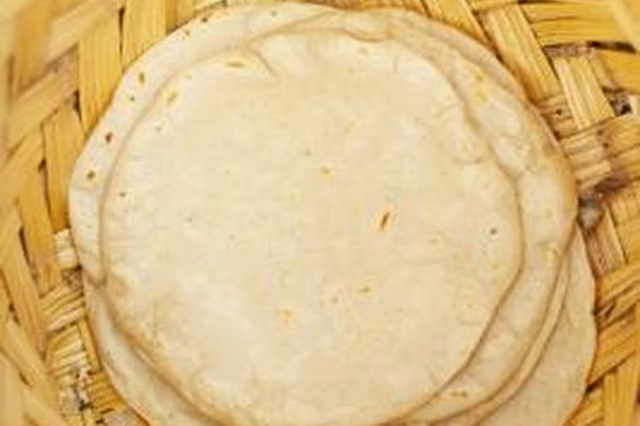

You don't have to use lard to make homemade flour tortillas, but you do need some fat. Fat, such as shortening, butter or oil, coats the protein molecules in the flour to minimize gluten production so the tortillas stay soft, tender and moist. Without some type of fat, you'll end up with dry, crumbly tortillas.
Break From Tradition
Although lard is the traditional fat used in authentic Mexican flour tortillas, you can use almost any type of fat. Substitute shortening, butter or canola oil for the lard. Each type of fat has its potential benefits and drawbacks, and provides a taste and texture that is slightly different than lard. No matter what fat you use, homemade tortillas almost always taste better than commercially produced ones.
Pull It Together
Traditionally, tortillas are made by whisking together the dry ingredients, including flour, salt and baking powder, in a bowl. Then, you cut in the lard to form a coarse crumb and add warm water. Knead to make a soft dough and you're on your way to flour tortillas. To swap out the lard for butter or shortening, just cut in equal amounts of shortening or slightly soft butter before you add the warm water. To use canola or vegetable oil, add the oil to the warm water and knead the mixture until it's smooth.
Taste the Difference
Replacing the lard in tortillas with oil, shortening or butter is similar to making changes in biscuits or pie crusts. Lard produces moist, flaky baked goods with a pleasant flavor. Shortening produces soft tortillas, but the flavor is decidedly unnatural. Tortillas made with butter may be slightly crisper, but deliciously flavored. Oil yields soft, neutral-flavored tortillas.
Lowering Saturated Fats
To make flour tortillas that aren't packed with saturated or trans fats, replace lard with oil, not butter or shortening. Butter has 54 percent saturated fat, while lard has 40 percent. Canola, vegetable or a neutral olive oil have less than 10 percent saturated fat and no hydrogenated or trans fats.