


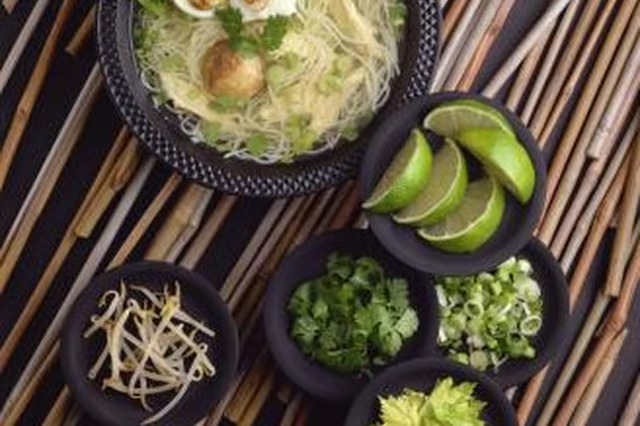

You'll experience a noodle paradigm shift the first time you try hu tieu, especially if you cherish spaghetti. Chewy, translucent and glutinous in texture, hu tieu, a tapioca-based noodle, is synonymous with Vietnamese food. Although rice- and wheat-flour shortages during World War II made hu tieu a regional necessity, you never find it in Chinese or Japanese cuisine. The best cooking methods take advantage of hu tieu's texture. Added to stir-fries in the last few minutes of cooking, hu tieu absorbs sauce like rice-based noodles, and when fried alone, hu tieu crisps up without absorbing much oil.
Step 1
Bring a pot of water to a boil.
Step 2
Rinse the hu tieu under cool running water while the water heats. Drain the noodles in a colander.
Step 3
Drop the hu tieu in the boiling water. Stir the noodles once or twice so they don't stick together.
Step 4
Cook the hu tieu for 5 to 6 minutes after the water returns to a boil. Taste a couple noodles to check for an al-dente bite before you remove the pot from the heat.
Step 5
Drain the noodles in the colander. Cool the hu tieu under cold running water for a few minutes to stop their cooking.
Step 6
Place the noodles in a bowl of cold water to prevent their sticking together until you're ready to use them.
Step 7
Cook the stir-fry until it has about 3 minutes left. Drain the noodles in a colander and add to the wok. Stir the noodles to coat and cook for about 2 to 3 minutes.
If you want to fry the noodles, drain the noodles in a colander until nearly dry but not sticking together. Heat a few tablespoons of frying oil in a wok or pan to about 350 degrees Fahrenheit, or over medium-heat for about 3 or 4 minutes. Add the noodles and fry until crispy, stirring frequently, about 2 or 3 minutes.