


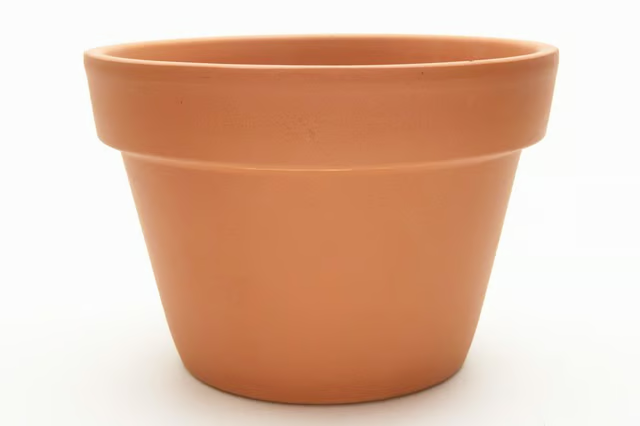
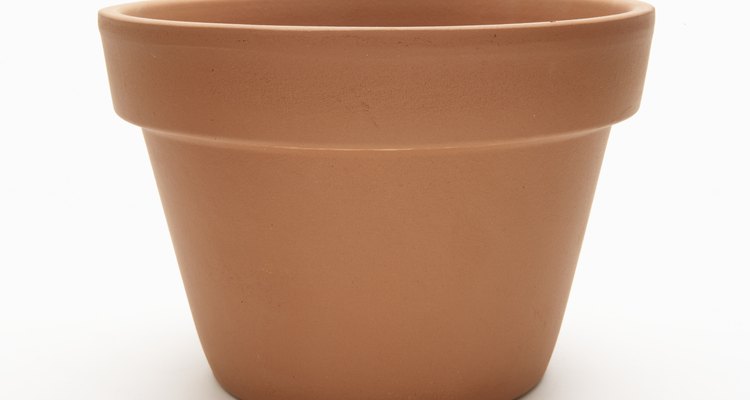
For thousands of years, people have been using clay pots for cooking and baking. Clay pots are viable for cooking even in today's modern times. Baking bread is a natural for clay pots, and artesan bakers have rediscovered the beauty of using them. A wide range of clay pots, from round to loaf shaped, are available on the market and can be used to bake bread in any oven. Clay pots can be found in specialty kitchen supply stores and online.
Soak the clay pot in cold water for 15 minutes. This helps to seal the pores of the clay and allows the pot to steam during the baking process.
Prepare your bread recipe according to directions. When the dough is ready for the second rise, shape it into loaves or balls that fit the clay pots. Do not fill the pot more than half full, to allow for additional rising.
Place the clay pots into a cold oven once the dough has doubled in the pot.
Set the oven temperature to 100 degrees higher than the bread recipe calls for, e.g., 450 degrees Fahrenheit if the recipe calls for a 350 degree Fahrenheit oven.
Bake the bread for 10 to 15 minutes longer than called for in the recipe. Because you are starting with a cold oven, bread baked in a clay pot takes a few minutes longer than if baked in metal or glass.
Remove the bread immediately from the clay pots after baking. The pot will continue to cook the bread after it is removed from the oven.