
How to Ferment Watermelon

How to Ferment Watermelon
Written By
Maxine Wallace
Maxine Wallace
Published: Dec 6, 2013
Updated: Jan 10, 2019
1 minute read
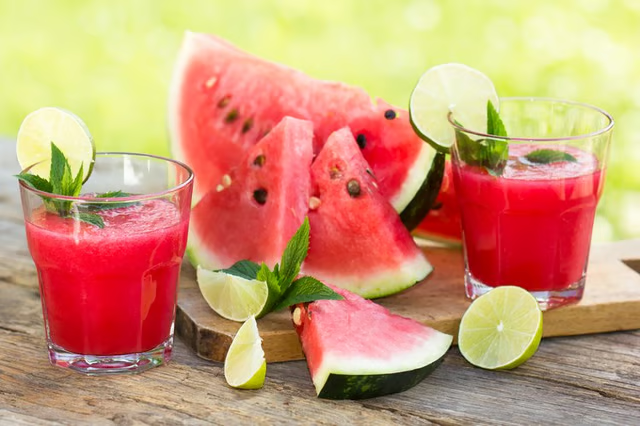
Watermelon smoothies with lime and mint
pilipphoto/iStock/GettyImages

Save those watermelon rinds from their usual fate on the compost or garbage heap! Instead, ferment them into a healthy treat to enjoy for months. Make fermented watermelons by combining the white inner rind of the already-eaten watermelon with salt and water. Leave the mixture at room temperature for one to two days and it ferments on its own into a slightly soured pickled watermelon. This natural fermentation process, called lacto-fermentation, uses bacteria present in the environment to break down sugars in the watermelon rind, while the salt acts as a preservative and helps to control the fermentation process.

Prepare the watermelon by removing all of the pink inner flesh, using a spoon. Use a knife to remove the outer green skin, leaving just the inner white rind. Cut the remaining rind into 1-inch pieces.

Mix a brine using 2 tablespoons of salt and 1 quart of water and stir until the salt is completely dissolved. Pack the watermelon rinds into the jar with the brine, ensuring the watermelon rinds are covered by at least 1 inch of brine. Add any spices you are using to the jar.

Cover the jar with a kitchen towel and secure the towel with a canning ring. Leave the jar on your counter for one to three days to ferment; the process should be done at room temperature, ideally between 60 and 70 degrees Fahrenheit.

Place the jar in your refrigerator, where your fermented watermelon rinds will keep for two to three months.

Tips

Use whatever whole spices you prefer for this recipe. Choices for fermented watermelon include ginger, mustard seed, peppercorns, cayenne and garlic. Use one or a mixture of spices for your watermelon ferment based on your own preferences.

If you do not have a canning ring, use a rubber band to secure the kitchen towel atop the jar.

Ferment watermelon out of direct sunlight.

Warnings

Measure the salt and water exactly when making any fermented product; the ratio of salt to water provides protection against harmful bacteria growth; measuring them incorrectly or carelessly can be dangerous.

Use clean utensils and containers when working with fermented foods to prevent contamination.

Maxine Wallace

Based in Portland, Ore., Maxine Wallace is a writer with more than 12 years of experience. With a bachelor's degree in journalism and experience working on marketing campaigns for large media agencies, she is well-versed in multiple…

Sponsored
Our Everyday Life Logo

Explore our everyday life, the best source for food and drink tips, health and general wellness, healthy relationships and much more.

Property of TechnologyAdvice. © 2026 TechnologyAdvice. All Rights Reserved

Advertiser Disclosure: Some of the products that appear on this site are from companies from which TechnologyAdvice receives compensation. This compensation may impact how and where products appear on this site including, for example, the order in which they appear. TechnologyAdvice does not include all companies or all types of products available in the marketplace.