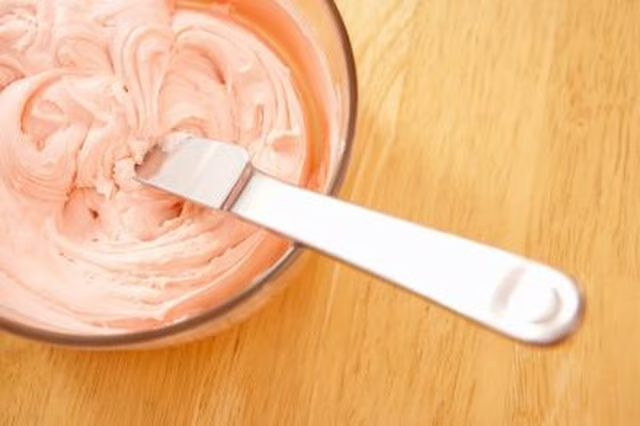
How to Soften a Stiff Buttercream

Can You Use Melted Butter for Frosting Instead of Softened Butter?
Written By
FD
Fred Decker
Published: Oct 25, 2013
Updated: Jan 10, 2019
1 minute read
Jupiterimages/Photos.com/Getty Images

Comedians often mine life's little inconsistencies for humor, such as hot dogs sold in dozens and buns sold in bags of eight. Bakers know that feeling as well, because -- for example -- your favorite icing recipe seldom makes the exact amount you need to go with your favorite cake. Making lots of icing and refrigerating the leftovers is a pragmatic solution to the problem, but it leaves your buttercream unusably stiff. Before you can ice your next cake, you'll need to soften the icing.

Step 1

Take the container of buttercream from your refrigerator. Scoop as much as you'll need into a mixing bowl, and return the rest -- if any -- to the fridge until your next decorating project. Break up the icing into smaller pieces, to speed the softening process.

Step 2

Rest the icing at room temperature for 30 to 45 minutes, or until it's workable. Cream it with a wooden spoon, or whip it in a stand mixer, until the friction softens it to a spreadable consistency.

Step 3

Add clear corn syrup, a few drops at a time, if the buttercream remains persistently stiff. The corn syrup will loosen and lubricate the buttercream, without altering its texture appreciably. Beat the buttercream until the corn syrup is fully distributed through it, and there are no remaining stiff areas in your icing.

Step 4

Spread or pipe the icing on your cake, as you would if it was freshly made.

Tips

If it's acceptable for your buttercream to form a thin crust, you can also thin it with milk or light cream. This is especially useful when you're piping delicate decorations with the buttercream.

Italian buttercream and other meringue-based buttercreams shouldn't be re-whipped, because it will cause them to deflate. Refrigerate a meringue buttercream in a shallow, flat container, and allow it to soften entirely by warming at room temperature. It will still lose some volume when you spread it, and won't make as smooth a surface as one that is freshly made, but it still will be a light and delicate icing.

Photo Credits

Jupiterimages/Photos.com/Getty Images

Sponsored
Our Everyday Life Logo

Explore our everyday life, the best source for food and drink tips, health and general wellness, healthy relationships and much more.

Property of TechnologyAdvice. © 2026 TechnologyAdvice. All Rights Reserved

Advertiser Disclosure: Some of the products that appear on this site are from companies from which TechnologyAdvice receives compensation. This compensation may impact how and where products appear on this site including, for example, the order in which they appear. TechnologyAdvice does not include all companies or all types of products available in the marketplace.