


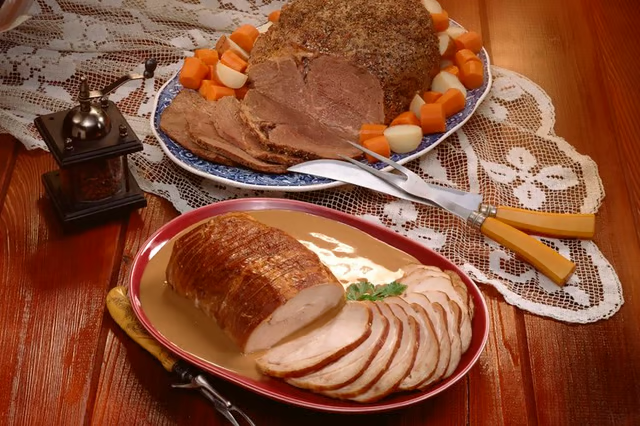
Knowing the direction of the grain of meat is critical when it comes to slicing it. Muscle is composed of bundles of fibers, and the grain refers to the direction of the fibers. These muscle fibers are tough to chew. Cutting across the grain will result in tender slices because the eater will have shorter muscle fibers to chew. If you try to slice meat with the grain, you will separate the muscle fibers and end up with a pile of meat strings. Avoid this scenario, unless you are making shredded barbecue.
Look very closely at the cooked or raw piece of meat for lines running across it. These are the muscle fibers that make the grain.
Find the muscles on the piece of meat if you cannot see the muscle fibers themselves. The grain will run parallel to the bones, such as the rib bones of chicken or turkey.
Cut two test slices for cuts of meat you cannot identify the grain. The test slices should be at a 90 degree angle to each other. Keep track of the cut used for each test slice. Taste the slices, and the more tender slice will have come from the cut properly made across the grain.
Slice the meat at a 90 degree angle to the direction of the grain so you are cutting across the line of muscle fibers instead of with the line.