


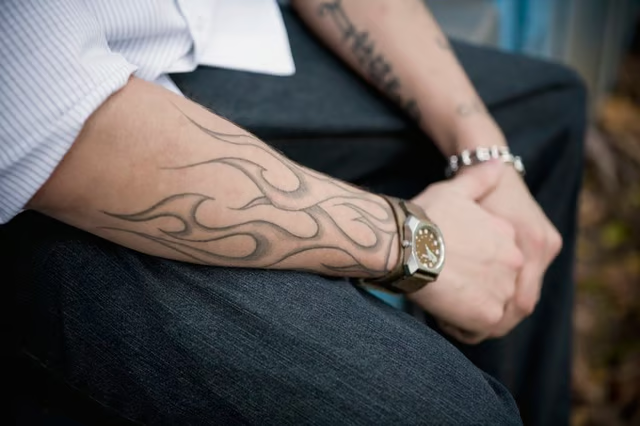
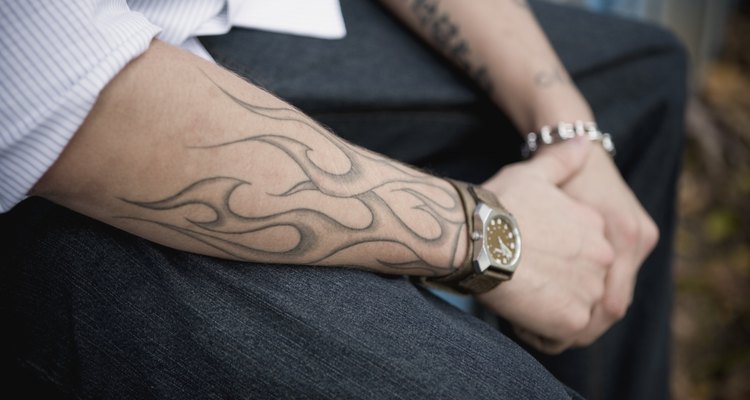
According to the Mayo Clinic, the most common and effective ways to remove a tattoo are surgical excision, laser treatment and dermabrasion. Laser treatment breaks up the pigment molecules in your tattoo, which are then cleared away by your immune system. Surgical excision and dermabrasion involve the physical removal of tattooed skin. Unfortunately, all of these treatments require trained specialists to perform them. One option you can use to remove a tattoo at home is salabrasion, which involves the scrubbing of the tattoo with an abrasive pad soaked in saline. While this method can reduce the visibility of your tattoo, it will likely leave your skin discolored and thickened. You should seek professional tattoo removal treatment if you want the results to look as natural and healthy as possible.
Shave the area to be treated. Removing the hair from the area will make the salabrasion process less painful and more effective.
Disinfect the tattooed area by washing it with antibacterial soap. You should consider asking your doctor for a prescription antibacterial sudsing emulsion agent to use in this step for superior disinfection.
Dip the gauze sponge in water, then wring it out so it remains moist, but not dripping wet. Repeatedly roll the sponge through a small pile of table salt to salinate the absorbed water. Stop rolling the sponge in the salt when the salt stops dissolving.
Scrub the tattoo energetically for 30 to 40 minutes or until your skin turns a deep red. The pain you may experience during this process should be mild, as the salt will act as an anesthetic.
Allow the treated area to dry, then apply a coating of antibiotic cream to it. Cover the area with a sterile bandage. If the bandage is too small, you can use sterile gauze secured in place with first aid tape.
Remove the dressing to check on the treated area after three days. If it has become redder or significantly more painful, it may be infected. Consult your doctor immediately if you suspect this to be the case.