


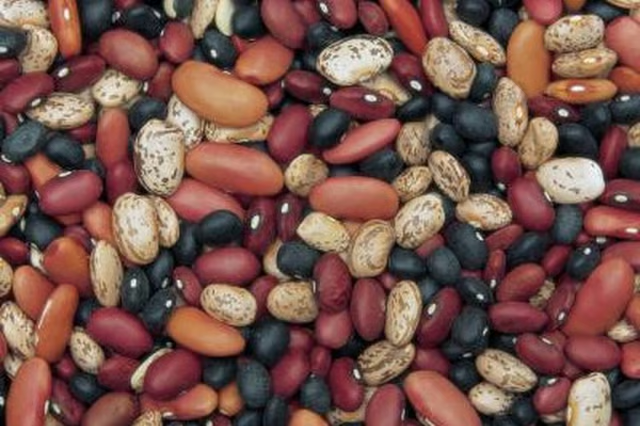

Beans are a low-cost, high-protein food, providing necessary fiber, minerals, carbohydrates and vitamins. Similarly, white rice is naturally rich in fiber and carbohydrates and when purchased in the United States, most rice is fortified with vitamins and minerals. When stored in its original package in a cool, dry location, beans keep for up to one year and white rice maintains its quality for up to three years. However, when stored in extra-secure packaging and ideal storage conditions, the versatile foods keep much longer.
Step 1
Purchase fresh, high-quality beans and rice. Inspect the beans and rice carefully for signs of insects. Discard food that is discolored.
Step 2
Store beans in sturdy, airtight containers, such as foil laminate packets sealed with an impulse sealer, which retain the quality of the beans for at least ten years. With only a slight decrease in quality, beans keep as long as 30 years. You also can store dry beans in food-grade plastic buckets or plastic gallon jars with airtight lids and food grade rubber gaskets. Beans keep best when the temperature is 75 degrees Fahrenheit or below.
Step 3
Store white rice in separate containers, using the same type of sturdy, airtight containers that you use for beans. When securely packaged and stored at a constant 70 degrees Fahrenheit, white rice retains its quality for up to 10 years. However, you can keep rice up to 30 years if you store it at 40 degrees Fahrenheit or below.
Step 4
Add oxygen absorber packets to remove oxygen and ensure long-term quality. Oxygen absorber packets are available at many health food stores. As a general rule, use one packet in each 5-gallon container.
Step 5
Store packaged beans and rice on racks or pallets. Do not place the containers directly on the floor.