


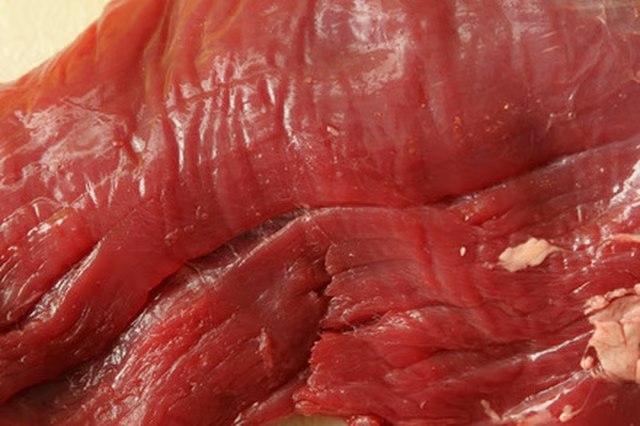
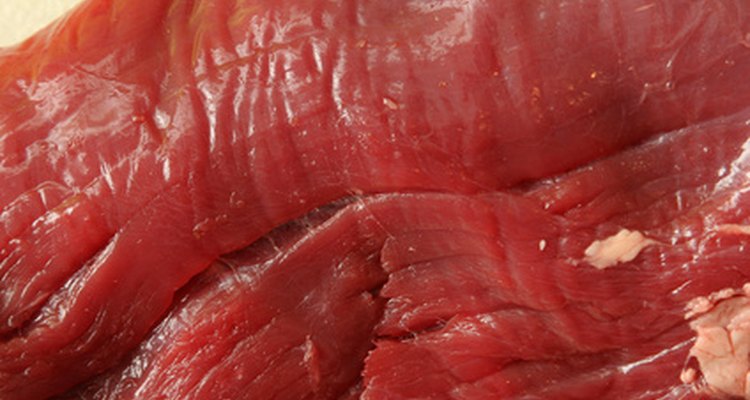
The most expensive cut of meat from the cow, the tenderloin, which tapers to a narrow end, must be trimmed and tied for even cooking. An average tenderloin, which weighs approximately 6 pounds, will serve eight to 10 people and cook in about an hour for those who like their meat rare. By cutting the tenderloin in half, you can please both rare meat eaters and those who like their beef more well done.
Place the beef tenderloin on a clean cutting board. Use a sharp knife to remove any visible fat from the meat.
Slide the tip of a sharp knife under one end of the silverskin to loosen the tough membrane from the meat. Work the knife down the length of the meat, pulling off the silverskin as you go. Discard it.
Trim any thin edges from the sides of the tenderloin. Cut away thin pieces of meat from the narrow end of the tenderloin. The more consistent the thickness of the tenderloin, the more control you'll have while cooking it.
Cut a 36-inch length of kitchen or butcher string.
Slide one end of the string under the tenderloin and pull it until the two ends of the string meet above the tenderloin.
Tie a knot in the string, pulling it tight and gathering the tenderloin into a tight cylinder.
Cross the string, bringing the two ends beneath the tenderloin and back to the top, again pulling the string taut.
Continue the criss-cross tying approximately every 1 1/2 to 2 inches along the entire length of the tenderloin.
Tie the string a second time at the far end of the tenderloin. Cut away excess string leaving approximately 1 inch of string above the final knot. The tenderloin is now ready to cook.