


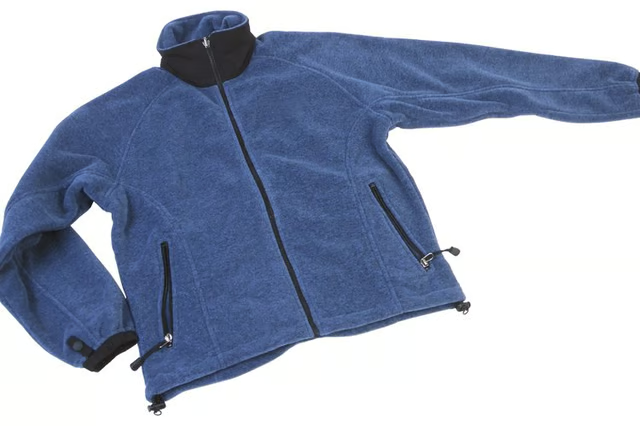
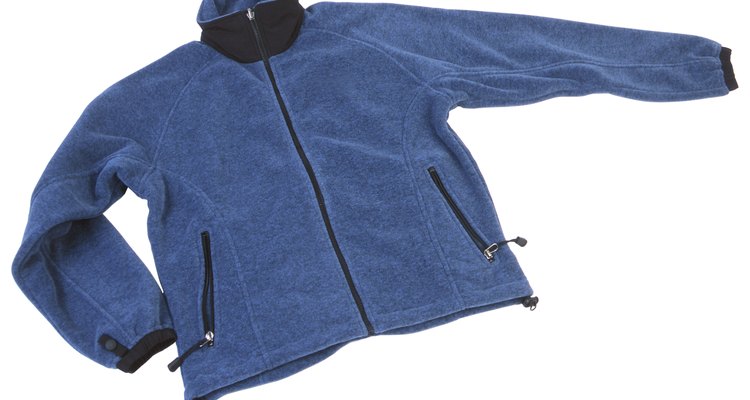
Fleece jackets typically are made out of wool or synthetic materials, such as polyester or nylon. Regardless of the fabric content, you can dye your fleece jacket using a top loading washing machine and fabric dye found in most drug stores. Most of these dyes are designed for use in a washing machine. Always follow manufacturer's directions when dyeing any item using store-purchased dye.
Washing Machine Method
Purchase a fabric dye -- in the color of your choice -- for use in washing machines. The package should include a list of fabrics the dye can be used for. If your jacket is wool fleece, you shouldn't have a problem. However, if your fleece is polyester or nylon, make sure the package states that the dye will work with these materials.
Follow the instructions included with the packaging. Typically, these dyes must be diluted with a specific amount of water on a stove top and added during a certain washing cycle. Oftentimes, the instructions will call for the addition of a small amount of vinegar as well.
Dye your jacket by running it through the cycle as indicated by the instructions. Make sure to run an extra rinse cycle after removing your jacket, as you will want to get rid of any dye residue. Otherwise, you could end up dyeing other clothes the next time you use the washer.
Stove Top Method for Wool Fleece
Soak the jacket in a mixture of water and vinegar, in a large pot or Dutch oven. Use 1/3 cup vinegar for every gallon of water. Allow the jacket to soak in the mixture for at least 1 hour. Vinegar helps wool retain dye, so soaking it for longer -- up to 24 hours -- will likely make your jacket darker.
Submerge the jacket by adding more water, if necessary. Add 2 tablespoons of vinegar and 2 teaspoons of food coloring. Bring the mixture to a boil, then turn down the heat. Allow the jacket to simmer until your desired shade is reached.
Turn the heat off, and allow the jacket to cool slightly. Remove the jacket with a pair of tongs and rinse immediately.