


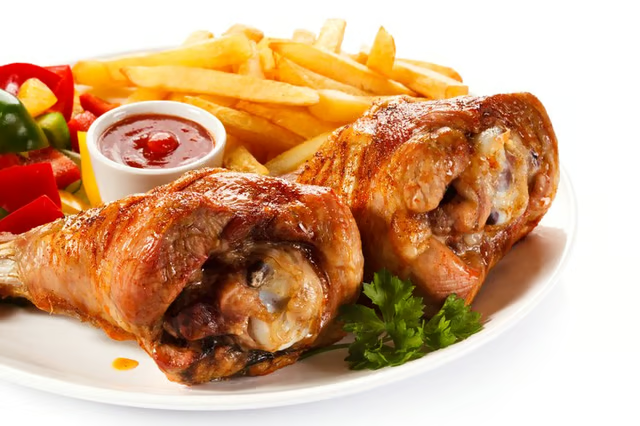
If a whole turkey is more turkey than you need, cook turkey thighs instead. Roasting turkey thighs is simple and requires only about two hours. Roasted turkey thighs are especially good if you prefer dark meat over white meat. Dark turkey meat is juicier and more flavorful than white meat because it contains twice as much fat. White meat and dark meat are both nutrient-rich, possessing protein, iron, zinc, potassium, phosphorus and several B vitamins.
Thaw the turkey thighs in the refrigerator for one to two days. You can also thaw turkey thighs in a bowl or sink filled with cold water, or under cold running water.
Brush the turkey thighs with oil, using a pastry brush or a clean paper towel. Use melted butter or margarine, or a heart-healthy oil such as canola or olive oil.
Heat the oven to 350 degrees Fahrenheit.
Place the turkey thighs in a baking dish, with the skin side facing up.
Cover the baking dish. If the baking dish has no cover, form a sheet of heavy-duty aluminum foil into a loose tent over the dish.
Roast thawed turkey thighs for 1 1/2 hours, or until the temperature on a meat thermometer reads 165 degrees Fahrenheit. Place the thermometer in the thickest part of the turkey thigh, away from the bone, as recommended by the University of Illinois Extension.
Uncover the pan and allow the turkey thighs to cook and the skin to brown for an additional 15 minutes.
Remove the turkey thighs from the oven. Allow the thighs to rest for 20 to 30 minutes before carving them, so the juices have time to settle and reabsorb through the meat.
Carve the turkey thighs by slicing them cross-wise. Transfer the turkey thighs to a serving platter.