

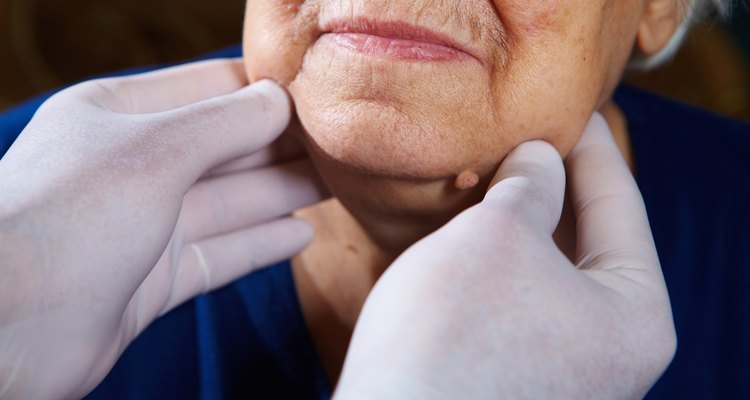
Have a Doctor Perform a Biopsy
A cutaneous horn is a cone-shaped lesion on the skin that grows straight outward and looks very much like a small horn. In some cases, it is a benign growth, but in others it may be pre-cancerous or cancerous. If a cutaneous horn develops on your body, contact a doctor and have him perform a biopsy on the cells. If it's not cancerous, you don't need to do anything, though you may want to remove it for cosmetic reasons. If it's malignant, it will need to be removed as quickly as possible.
Have It Removed Surgically
Never attempt to remove a cutaneous horn yourself. A dermatologist or qualified doctor can remove it surgically, then close up the wound with stitches. For large horns, skin grafting may be necessary. It may leave a scar, but that's preferable to keeping the horn, especially if it's malignant. Some doctors may use alternate treatments such as cryosurgery, which freezes the skin of the cutaneous horn and allows it to fall off naturally.
Apply Topical Chemotherapy
Your doctor can administer topical medications, especially anti-cancer medications, that will remove the cutaneous horn gradually. Topical creams may leave a lingering redness after the horn is removed, but that usually fades over time.
Follow Up After Surgery
A cutaneous horn may be malignant, which means you should schedule regular appointments with your doctor after it is removed. He will check to see that the horn doesn't recur and that all cancerous or pre-cancerous cells have been safely removed. In addition, you should stay out of the sun after you've had a subcutaneous horn removed. Wear clothes that cover your whole body and a wide-brimmed hat if you're going to be out during peak sun hours. Always apply sunscreen to your skin before you go outside, even on cloudy days. It will not only protect the spot where your cutaneous horn was, but also help prevent new ones from developing.